

IEP Team Roles and Responsibilities in Education
As a speech-language pathologist working closely with IEP teams, I know how overwhelming this process can feel for families — especially when it’s filled with unfamiliar terms, multiple team members, and long meetings.
I often hear from parents, “Who are all these people?”
This blog post will help you — whether you’re a special educator, SLP, or service provider — support families by making the roles and responsibilities of the IEP team easier to understand with free and editable Canva templates!
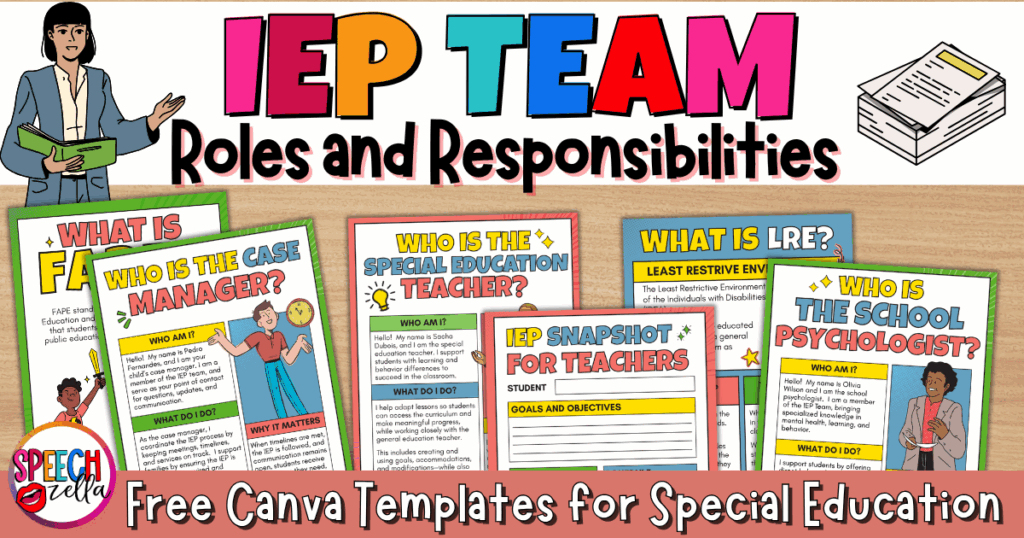
Each template will help you clearly explain the roles and responsibilities of the IEP Team to parents, so they can understand the process.
Because when families understand the IEP team, meetings become more collaborative — and that’s where the magic happens.
🌟 Look out for this symbol below to download the FREE school resources!
💡What Does IEP Stand For?
Firstly, IEP stands for Individualized Education Program. This is a customized education plan created for students who qualify for special education services under federal law.

An IEP is more than just a piece of paper. It’s also a commitment. The IEP outlines a child’s current skills, strengths, and needs — likewise, it maps out the supports and goals that will help them succeed in school.
Every student is unique, so that’s why the IEP is personalized to their needs. The IEP team works together to create an IEP based on evaluation data, parent input, and observations.
💡What Is an IEP in Education?
In education, the Individualized Education Program (IEP) is a legal plan mandated by the Individuals with Disabilities Education Act (IDEA). Basically, it ensures every child with an IEP has access to Free Appropriate Public Education (FAPE).
An IEP outlines:
- Access to the general education curriculum
- Accommodations (such as extended time)
- Modifications (like reduced assignments)
- Related services personnel (such as speech-language pathologists, occupational or physical therapists)
- Measurable, annual goals tailored to the student’s needs
In summary, the IEP process is how schools and families work as a team to help students succeed in the classroom.
🌟If you want some handy printouts you can give to parents, then check out the free Canva resources below:
- The Individuals with Disabilities Education Act (IDEA) Poster
- What is LRE and FAPE?
- IEP Terms Made Simple Handout: Get all the IEP acronyms explained in one place (e.g., FAPE, LRE, IEP)
- Parental Rights in Special Education: What are the parents’ rights?
- What is a Transition Plan? Use this guide whenever a student is transitioning out of high school.
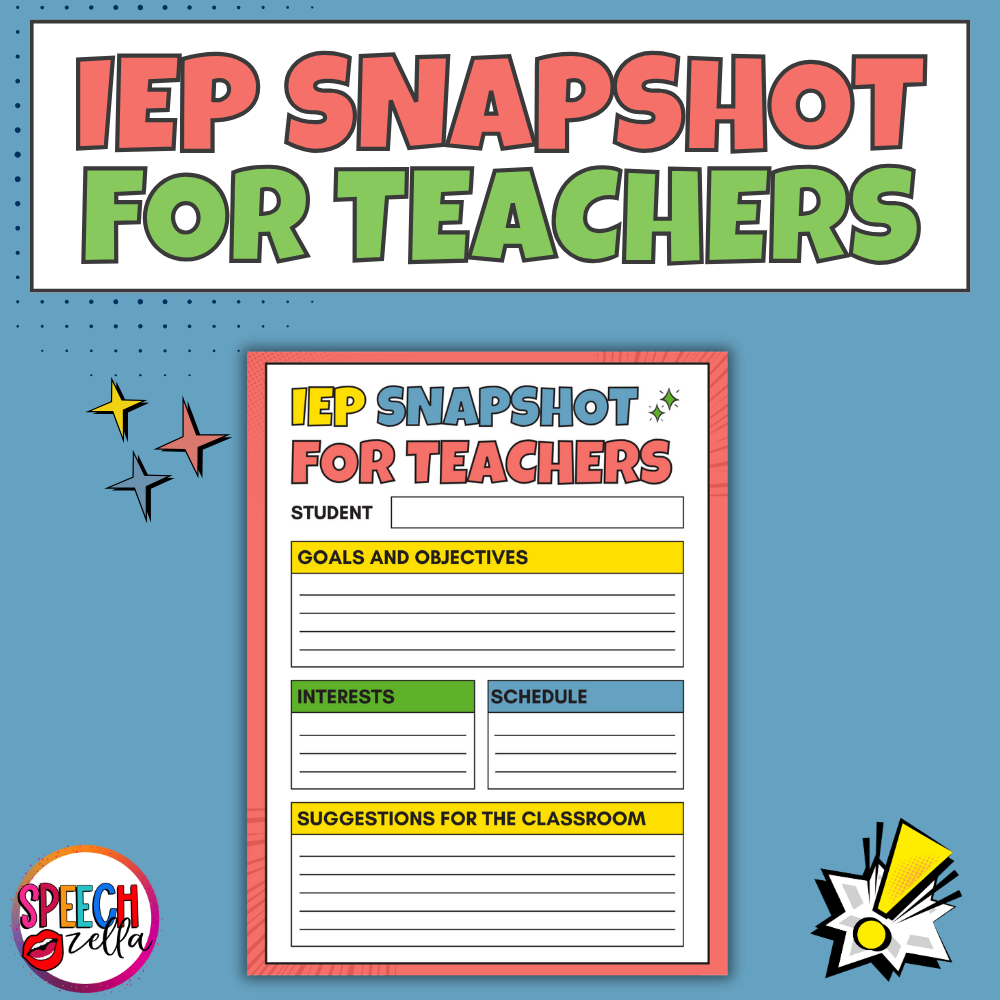
- IEP Snapshot for Teachers: A handy sheet to provide to teachers so they understand the IEP.
💡Required IEP Team Members
Every IEP meeting must include the following people, and each plays a critical role in the planning and support process.
Here’s who must be part of the IEP team:
❤️ Parents or Legal Guardians
Above all, the parent brings the child’s story to life — their history, personality, fears, dreams, and everyday life. A parent is the most important member of the IEP team and can:
- Shares the child’s strengths and concerns
- Asks questions and advocates for the child.
- Provides valuable insight into the child’s home life.
💡 Pro Tip: Encourage parents to bring notes or invite someone with special expertise — since this is allowed at the parents’ discretion.
❤️ General Education Teacher
The child’s teacher helps ensure that the child’s IEP supports access to the same curriculum as their peers. After all, they spend the most time in the classroom with the gen ed teacher. The general education teacher:
- Provides input on classroom expectations
- Shares strategies and accommodations
- Helps bridge access to the general curriculum
🌟 Use the IEP Snapshot for Teachers Canva template to keep general ed staff in the loop.
❤️ Case Manager
The case manager keeps the team organized and is also the main point of contact between families, teachers, and administration. The case manager handles the development of the IEP and:

- Coordinates the IEP process so meetings and timelines are met.
- Ensures the IEP is followed closely at school.
- Tracks timelines, contacts families, and coordinates services.
🌟 Use the All About the Case Manager Newsletter to explain their vital role.
🌟 Canva Resource: Use the All About the IEP Team Newsletter to explain these roles clearly to families.
❤️ Special Education Teacher
The heart of the IEP process! The child’s special education teacher tracks the progress and delivers services. This teacher:

- Adapts lessons to help students access the curriculum.
- Creates and tracks goals and services.
- Works closely with the general education teacher and supports other teachers.
🌟 Share the Who is the Special Education Teacher Poster to explain this role to families.
❤️ Other School Personnel:
There are other people who must attend the IEP meeting. These include:
- Translator (if necessary)
- The student (if over the age of 16)
- A school representative who is familiar with the special and general education curriculum.
Key IEP Team Roles and Their Responsibilities
Let’s look at the other team members in detail and what their “superpower” is on the team.
❤️ School Psychologist
This team member provides and interprets assessments. They may help design behavior intervention plans or evaluate emotional and social needs.
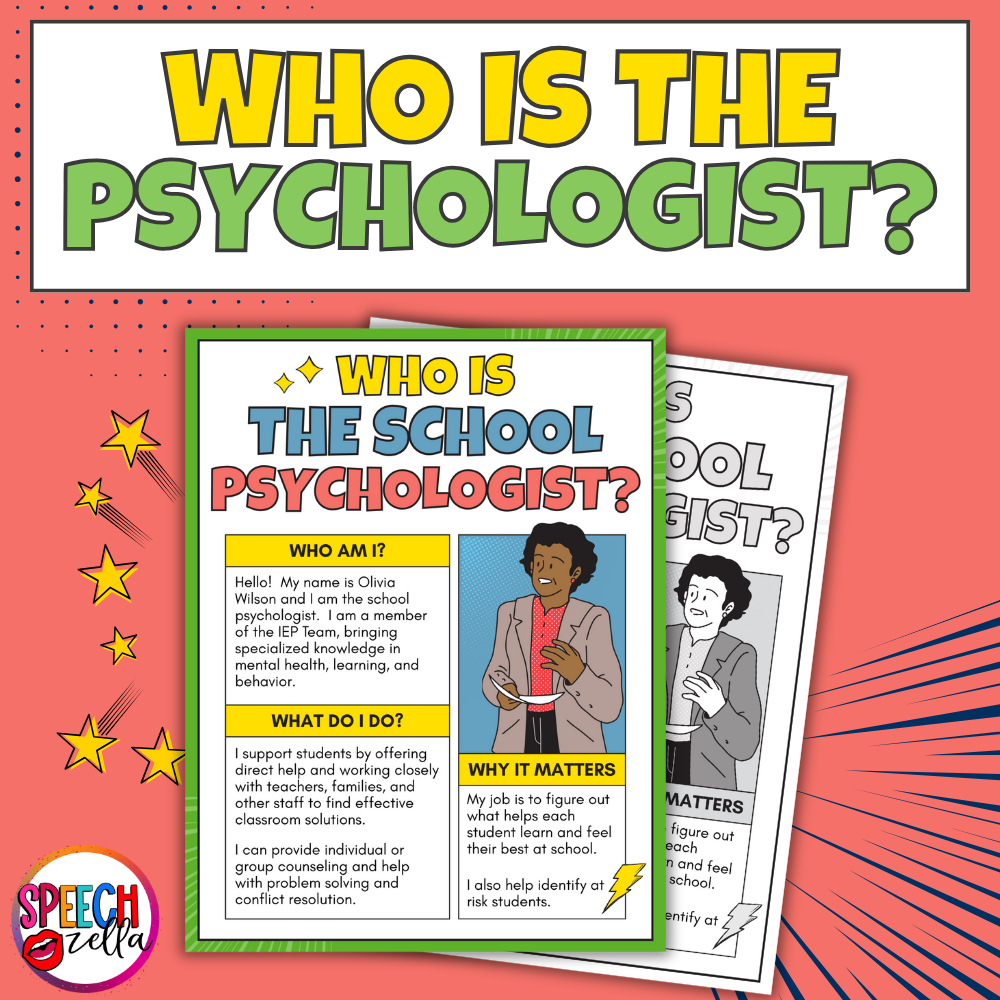
Their role may include the following:
- Explain testing results
- Suggest supports or services
- Collaborate on functional behavior assessments
🌟 Check out this free Canva template to explain what the school psychologist does!
❤️ Related Service Providers
These are the professionals who provide related services to support your child’s IEP goals. Examples include:
- Speech-language pathologists assess and treat students with communication disorders.
- Physical therapists help students with mobility and gross motor development.
- An occupational therapist works with students who need help with fine motor skills or have sensory needs.
- Counselors provide family support and can assist students with emotional regulation.
❤️ Social Worker
Social workers help families and school staff help students feel safe, supported, and ready to learn. Here’s what they do as part of the IEP team:
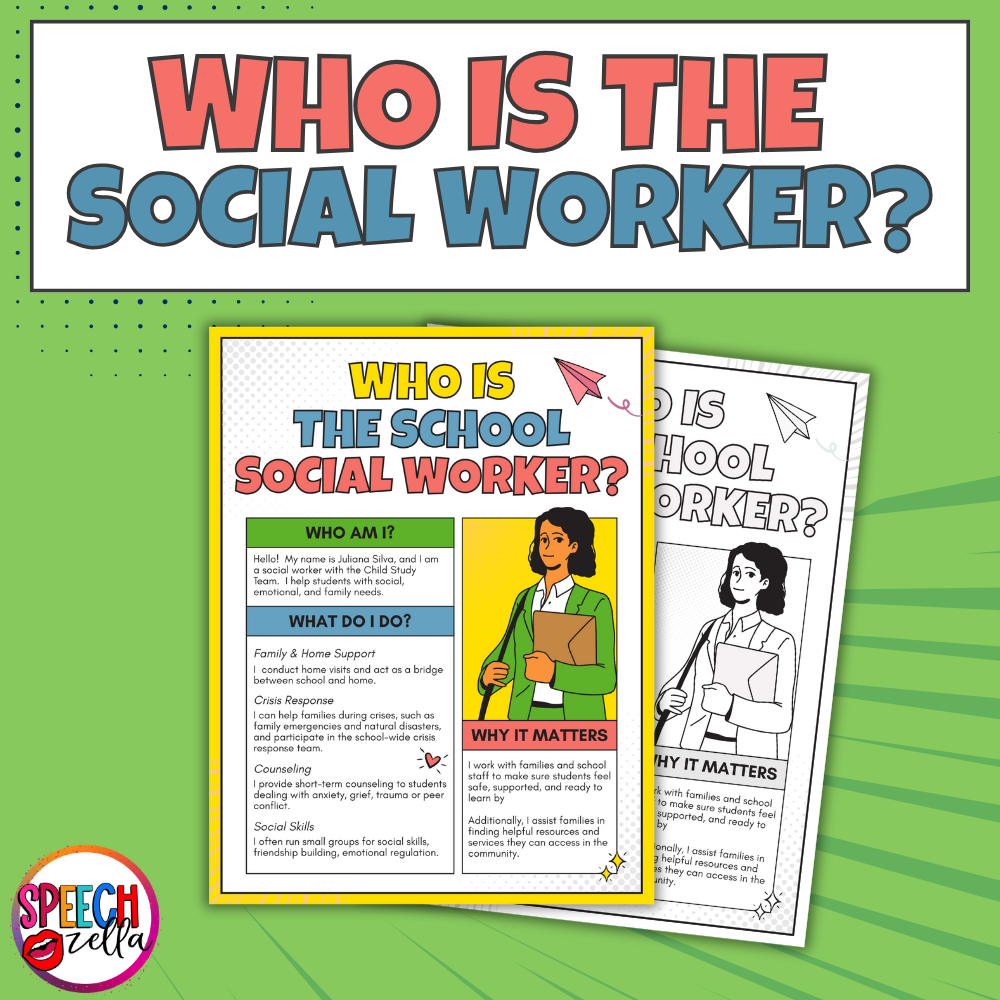
- Social workers can conduct home visits and act as a bridge between school and home.
- Run small groups for social skills, friendship building, and emotional regulation.
- Help families during a crisis, such as family emergencies and natural disasters.
🌟 Check out this free template All About Social Workers.
💡The IEP Team Process
When families understand the IEP process, ithey feel confident and empowered. The following is a simplified version of how it works:
Referral
The process often begins when a teacher or the parents of the child request an evaluation when:
- The student is struggling academically, and / or
- Interventions have not helped the student progress in the classroom.
These are the first things to remember about referring a student for special services.
Identification Meeting:
- A meeting is held with the student’s general education classroom teacher, case manager, and parent to determine if evaluations are warranted.
- If no evaluations are warranted, the IEP team closes out the referral and no further action is taken.
- If evaluations are warranted, the IEP team must determine which evaluations are necessary to understand the student’s strengths, needs, and eligibility for services.
Evaluations:
- After completing the initial evaluation, the case manager sends copies of the report home for the parent to review.
- The parent or guardian has at least 10 days to review all the evaluation reports before the eligibility meeting.
Eligibility Meeting:
- If the student is eligible for services, the IEP team must decide which of the 14 classification categories applies to the student.
- If the team finds the student eligible, they can move forward with the IEP meeting.

IEP Meeting:
- The team can hold this meeting separately or combine it with the eligibility meeting.
- During this meeting, the team presents and discusses the IEP draft.
- This IEP contains information about the student’s needs and strengths, but also outlines the goals, classroom placement, and services the student will receive.
Services Begin
- Support is delivered based on the plan, and progress monitoring is conducted.
📌 Reminder: Parents can request a new IEP meeting at any time.
💡 How Often Should an IEP Be Reviewed?
By law, the IEP is reviewed at least once every school year. The IEP team will revisit the initial plan and discuss the students’ ongoing needs and strengths.
However, reviews can happen more often if necessary. Basically, this allows the team to adjust goals, services, or supports based on the child’s progress.
If the child is not making progress or if significant changes occur (like a move or diagnosis), the school district or parent can request a meeting sooner.
📌Additionally, every 3 years, the team will re-evaluate the student or conduct a review of records to determine continued eligibility.
💡 What Is the Purpose of the IEP Team?
Now that we know what the IEP team is, and who is involved in the IEP team meeting, let’s find out the purpose of the team. When a child is referred for special services, the IEP team:

- Identify the child’s needs
- Recognize the child’s strengths
- Create measurable goals
- Decide what special education services and supports are needed
- Plan how the student will access the general education curriculum
- Monitor progress and make changes as needed
Together, the team ensures that the child’s IEP is working. That means supporting the student academically, socially, behaviorally, and emotionally.
🌟 Here is a Canva Presentation that explains what Special Education and the IEP Team is!
🎯 Goals and Objectives
Parents should understand the student’s IEP goals and objectives because they are an important part of the IEP – they shape how progress is measured and supported.

When parents understand the goals, they can:
- Follow along with what’s being taught and practiced at school
- See what skills their child is expected to build
- Understand how success will be measured
Use the Goals and Objectives Poster to explain this at your next parent night or staff meeting!
🌟 Share These Canva Tools with Parents and Teams
To help your IEP team support families, here are parent-friendly Canva resources to include in welcome packets, emails, or school websites:
- What to Expect in Speech Therapy
- All About Speech Therapy Newsletter
- What Happens in a Speech-Language Evaluation?
- Who is the Special Education Teacher?
- What is the IEP Team? newsletter
- Who is the School Psychologist?
- Who is the Case Manager? newsletter
- Who is the School Social Worker? newsletter
- What is Special Education? presentation
- What Is a Transition Plan? poster
- IEP Terms Made Simple newsletter
- IEP Snapshot for Teachers
- What is IDEA?
- IEP vs. 504 Plan Poster
- What is LRE (Least Restrictive Environment)?
- Goals and Objectives Poster
- Parental Rights Under IDEA newsletter
📌These tools help simplify complex topics, boost parent engagement, and reduce confusion at meetings.
❓FAQs About the IEP Team
💡 How to Prepare for an IEP Meeting as a Parent
IEP meetings can feel intimidating — but a little preparation goes a long way in helping you feel confident, informed, and ready to advocate for your child.
Here are a few simple tips to help you prepare:
Review Your Child’s Current IEP
Look at your child’s present levels, goals, and services. Bring any notes or questions to the meeting. Ask yourself:
- Are these goals still appropriate?
- Is my child making progress?
- Do the services match my child’s current needs?
Write Down Your Concerns and Observations
Obviously, no one knows your child like you do! Having this written down helps keep the conversation focused. Think about:
- Academic struggles or strengths
- Social or emotional changes
- Behavior at home vs. at school
Bring Documentation or Reports
If your child receives private therapy, has a new diagnosis, or has recently had a change at home, it can be helpful to bring:
- Therapist or doctor notes
- Report cards
- Behavior logs
Ask for a Draft in Advance (if possible)
Many schools will send a draft of the IEP ahead of time so you can review it. Also, use sticky notes or highlights to mark areas you’d like to discuss.

Remember, You Can Bring Support
You can invite someone to the meeting — a friend, relative, or advocate — to help you take notes or speak up.
A parent can invite someone at their discretion, and it’s your legal right under the IDEA.
Ask Questions — It’s Okay
Don’t be afraid to ask for explanations about goals, services, or special education terms. Your questions are so important.
This is a team meeting — and you’re an equal part of the team.
📌It’s a good idea to highlight any questions or concerns ahead of time so you feel confident going into the meeting.
✨ Final Thoughts: Every IEP Team Member Matters
IEP meetings can feel like alphabet soup. But at the heart of it all is this:
✅ A group of people who care about the student
✅ A plan designed to meet the student’s unique needs
✅ A system that should support — not overwhelm — families
The members of the IEP team each bring their special expertise and passion to help the student thrive; however, the parents are the most important voices at the table.
🌟 Bonus: Share the IEP Terms Made Simple Newsletter so parents can prepare for their meetings too!
Whether you’re a speech-language pathologist, teacher, or administrator who works for a school system — or you’re a parent reading this for the first time — remember this: when we work together, students succeed.